Loft Conversions in Conservation Areas: What You Really Need to Know
Living in a conservation area and thinking about a loft conversion? The first thing I want to say is stop worrying, because the number of people who come to us convinced it is completely off the table is remarkable. It is not. We do them regularly.
What a conservation area does is change the process, not the outcome, and understanding that difference is what separates homeowners who get the conversion they want from those who give up before they have even started.
A conservation area exists because your local planning authority has decided the character and appearance of that place is worth protecting. Historic England data puts the number of designated conservation areas in England alone at over 10,000, covering everything from medieval market towns to Victorian seaside terraces to postwar garden suburbs.
So the chances are you are not dealing with something unusual or obscure. Plenty of people go through this process every year and come out the other side with a fantastic new room.
What changes is your relationship with Permitted Development rights. Under normal circumstances those rights allow you to carry out a loft conversion without making a planning application at all, provided you stay within certain volume limits and design constraints.
In a conservation area those rights are either restricted or removed entirely the moment your proposals affect the external appearance of the roof. That is the key trigger.
Anything that changes what your home looks like from the outside is almost certainly going to need a full planning application, and that is where a lot of people get caught out.
What Will and Will Not Get Through Planning?
Let me be direct about this because vague answers on this subject waste everybody’s time. A Velux or roof light conversion, where you are simply inserting windows flush with the existing roof slope, sits in the most favourable position.
If those windows are not visible from a public highway, many local planning authorities will not require a formal application. But do not assume. Check first, because the rules vary between authorities and between individual conservation areas within the same district.
Dormer conversions, hip to gable extensions and mansard conversions all change the form and profile of your roof in ways that are clearly visible.
Every single one of those will need planning permission in a conservation area. That is not a grey area and any contractor who suggests otherwise is not someone you want on your roof.
What planners are actually assessing when they look at your application is whether the proposed works preserve or enhance the character of the area. Those two words, preserve and enhance, come directly from Section 72 of the Planning (Listed Buildings and Conservation Areas) Act 1990 and they are the legal test your application has to satisfy.
Conservation officers are not obstructing you for the sake of it. They are applying a legal framework and the better you understand that framework the better your application will be.
Materials are where a huge number of applications fall down.
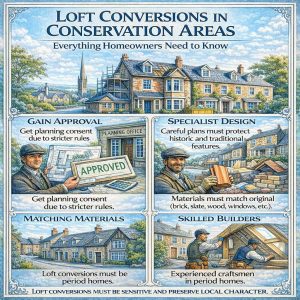
If the surrounding properties have natural Welsh slate roofs and you propose a dormer finished in concrete interlocking tiles, that application is going to struggle. The expectation in most conservation areas is that materials match or closely complement what already exists on the street. That sometimes means spending more than you would on a standard conversion. We always have that conversation upfront so there are no surprises halfway through a project.
Scale and visibility are the other determining factors. A rear dormer set well below the ridge line, finished in appropriate materials and not visible from the street outside is a very different planning proposition to a large front facing box dormer that dominates the roofline of a Victorian terrace. If your property gives you the option to push the conversion to the rear, take it. It genuinely makes the planning process simpler and the approval more likely.
Listed Buildings Are Not the Same Thing
This causes more confusion than almost anything else we deal with. Conservation area status and listed building status are completely separate designations and they carry completely different requirements. Some properties are both, which adds another layer of complexity, but many conservation area properties are not listed at all.
If your home is a listed building, whether Grade I, Grade II* or Grade II, you need listed building consent for any works that affect its character. And that covers the interior as well as the exterior. A standard planning application does not cover this. They are two separate processes running alongside each other and missing one of them has serious legal consequences.
You can check your property’s listed status on the Historic England National Heritage List in about two minutes. If it is listed, get specialist advice before you do anything else. An architect with genuine conservation and listed building experience will cost more than a generalist, but they will also produce a scheme that actually stands a chance of being approved rather than triggering enforcement action.
Use the Pre Application Process
Most local planning authorities offer pre application advice. You pay a fee, submit your outline proposals and get officer feedback before you commit to a formal application. A lot of homeowners skip this to save a few hundred pounds and almost always regret it.
A refused planning application means redesign costs, resubmission fees, lost time and in some cases a property that carries a refusal on its planning history. The pre application route tells you exactly where the officer stands, what they will and will not support, and whether there are specific material or design requirements you need to factor in. That information is worth considerably more than the fee costs.
The Honest Truth About Cost
A loft conversion in a conservation area costs more than a standard conversion and pretending otherwise helps nobody. The planning process is longer, the design work is more involved, material specifications push costs upward and any revisions or resubmissions add to the bill. Factor that in from the start rather than discovering it six months into a project.
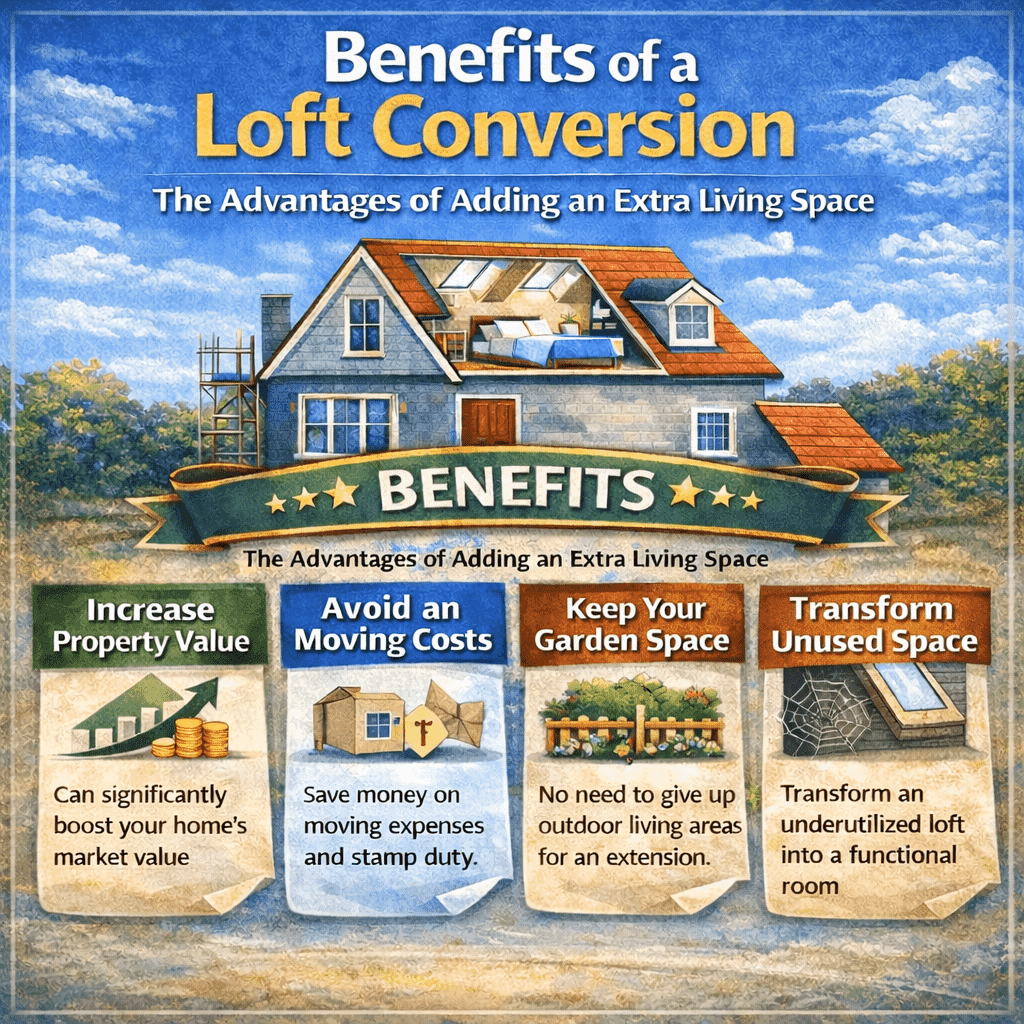
What I would say though is that the properties sitting inside conservation areas tend to be exactly the ones where a loft conversion makes the most financial sense. The Royal Institution of Chartered Surveyors consistently reports that loft conversions add between 10 and 20 percent to residential property values. In a sought after conservation area location with period character and high demand, that uplift tends to sit firmly at the top of that range.
The process is more involved. The reward, when it is done properly, is absolutely there.
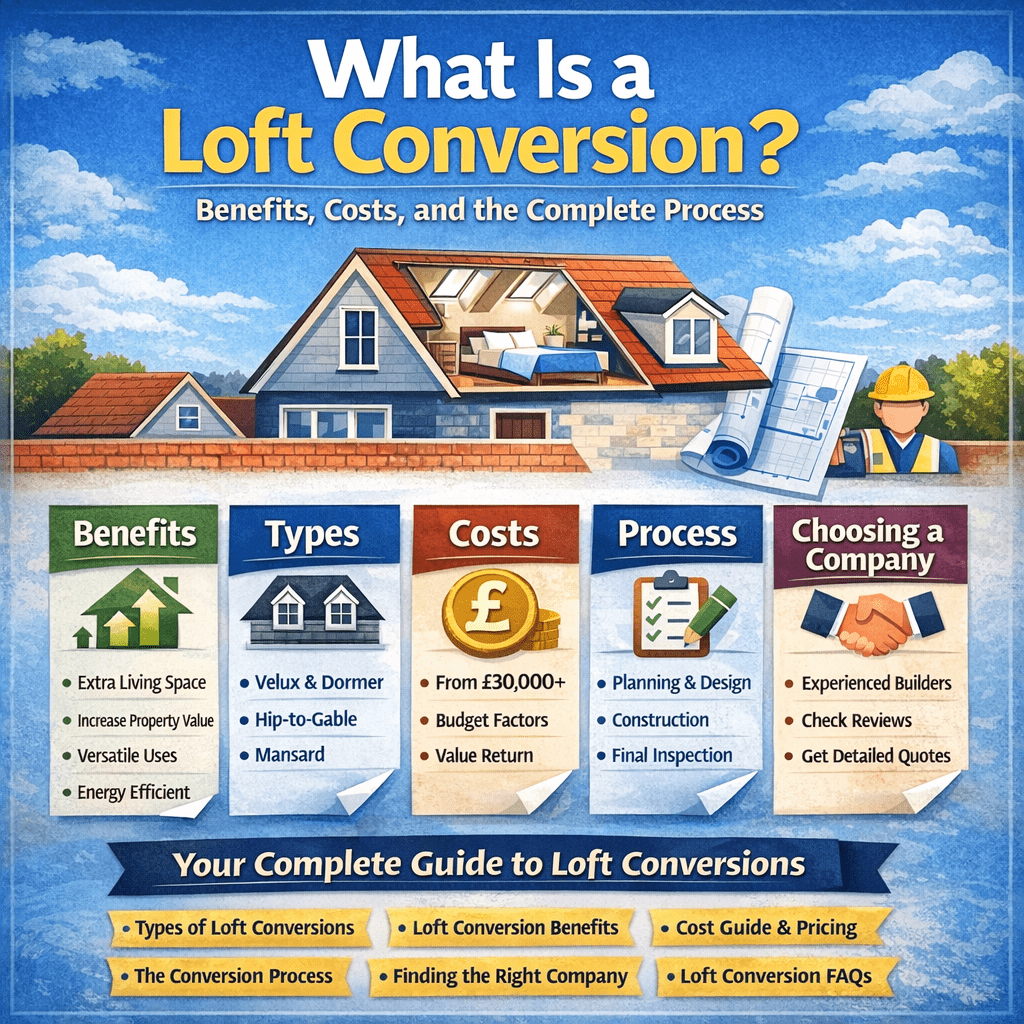
If you want to understand everything that goes into a loft conversion from the very first conversation to the day you get the keys to your new room, our guide to what is a loft conversion, is the place to start.
The Bottom Line
A conservation area adds a layer of process to your loft conversion. It does not add an insurmountable barrier. The homeowners who struggle are almost always the ones who go in underprepared, pick a contractor who does not understand the planning landscape or try to cut corners on design and materials to save money upfront. That approach costs more in the long run, every single time.
Get the right architect involved early. Use the pre application service. Be realistic about materials and design. And work with a loft conversion company that has actually done this before in a conservation area setting, not one that is figuring it out on your property.
We have helped homeowners in conservation areas get exactly the conversion they wanted and the process, while more involved than a standard project, is absolutely manageable when it is handled properly from the start. If you are sitting there wondering whether your property is even suitable, that is exactly the conversation we are here to have. There is no obligation, no sales pressure, just honest advice from people who do this every day.
Get in touch with Roof to Room today and let us tell you what is actually possible for your home.