Top 9 Loft Conversion Mistakes Every Homeowner Should Know About
Most loft conversions do not go wrong because of bad building. They go wrong long before a tool ever turns up on site.
I see it all the time. Rushed decisions, vague quotes, assumptions instead of proper checks. People fall in love with the idea of extra space and skip the boring but vital groundwork. Then they are surprised when costs climb or plans change.
Ask yourself this. Do you really know what you are agreeing to, or are you hoping it will all work itself out?
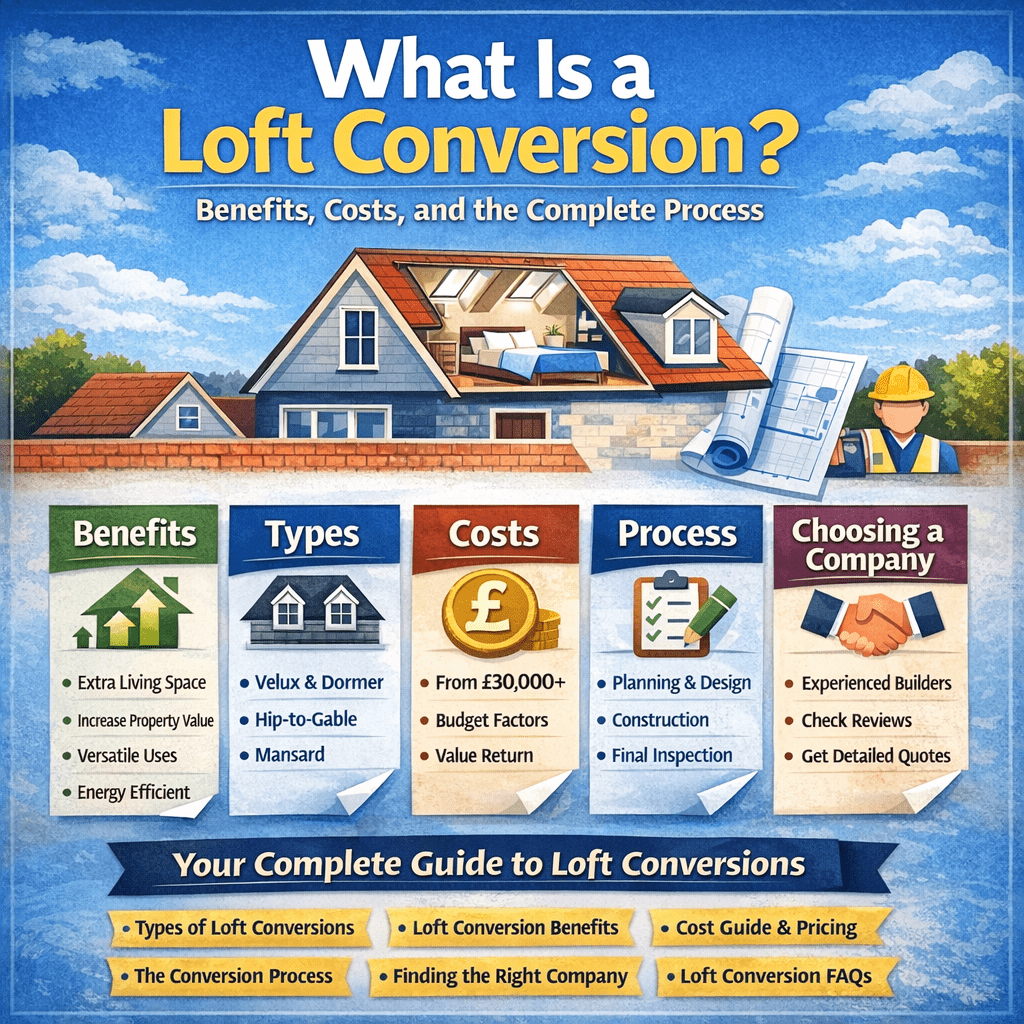
If you are still at the early stage and want to understand the basics properly, it is worth reading our guide on what is a loft conversion before going any further.
This is not scare tactics. It is real world experience. Get the early decisions right and most problems never appear. Get them wrong and you spend the build firefighting instead of enjoying it.
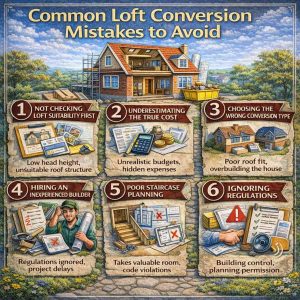
1. Not Checking Loft Suitability First
This is one of the most common loft conversion mistakes I see, and it catches people out all the time.
Homeowners assume the loft will work because it looks big enough when you poke your head up there. But looks are deceptive. Head height drops fast once new floors and insulation go in, and suddenly that generous space feels very different.
Roof structure is another one. Traditional roofs are usually forgiving. Trussed roofs need far more work to make them safe. And then there’s the staircase. If you cannot get proper stairs in without wrecking the layout below, that is not a small issue.
So ask yourself early, is my loft suitable for conversion, or am I guessing?
Honest checks at the start save serious money and disappointment later.
2. Underestimating The True Cost
Underestimating the true cost is one of the most common loft conversion mistakes I see, and it usually starts with a number pulled from thin air.
People set a budget based on what they hope it will cost, not what it realistically will.
Structural steel, fire regulations, insulation upgrades and building control fees are quietly ignored, then act surprised when the figure moves.
Have you actually allowed for what the regulations demand, or just the room you can picture?
Finish level creep is another big one. A basic bedroom becomes an ensuite. Then storage gets added. Then better windows. None of these are bad choices, but they all cost money, and this is where loft conversion budget problems begin.
The biggest error of all is skipping contingency. Industry guidance from bodies like the Federation of Master Builders consistently recommends allowing around ten to fifteen percent for the unexpected. Ignore that and stress usually follows.
If you want a realistic breakdown and to avoid loft conversion cost mistakes, read our full guide on loft conversion costs before locking anything in. It will save you learning the hard way.
3. Choosing the Wrong Type of Loft Conversion
Choosing the wrong type of loft conversion is a mistake that usually starts with inspiration, not information.
I see people fall in love with a mansard or a big dormer because it looks great online, without asking whether their roof or house actually suits it.
That is how the wrong loft conversion type gets locked in before anyone has checked the structure properly. Have you chosen what works for your home, or just what looks impressive on a screen?
Overbuilding is another common issue. Not every house needs the biggest possible conversion. Sometimes a simple rooflight conversion gives you exactly what you need without the extra cost, planning headaches, or disruption. Bigger is not always better.
In my experience, the best type of loft conversion is the one that fits the roof, the budget, and how the space will actually be used. When people chase scale instead of suitability, regret follows.
If you want to avoid this mistake, it is worth reading our full guide on types of loft conversions before making any decisions.
4. Hiring a General Builder Instead of a Specialist
Hiring a general builder instead of a specialist is one of the most expensive mistakes I see.
Lofts are not just extensions in the air. You are dealing with roof loads, new floors, tight headroom, staircase design, and fire regulations all at once.
Miss one of those and the whole project feels compromised. General builders often underestimate stairs and fire safety because they do not deal with them week in, week out. That is where problems start.
I have stepped into jobs where ceilings had to be reopened, stairs redesigned, or layouts ripped apart because the experience was not there at the start. That costs time, money, and patience.
So ask yourself this. Do you want someone learning on your house, or someone who specialises in lofts every day?
If you are weighing up wether to use a loft conversion specialist vs builder, it is worth reading our guide on how to choose a loft conversion company before you decide.
5. Poor Staircase Planning
Poor staircase planning is one of those loft conversion stairs problems that homeowners only realise once it is too late.
I have seen beautiful lofts completely let down because the stairs were squeezed in as an afterthought.
Suddenly a bedroom downstairs feels chopped in half, a hallway becomes awkward, or the flow of the house just does not work anymore.
Was that extra room upstairs really worth ruining the space you use every day?
Then there is compliance. Staircase mistakes in a loft conversion often come from ignoring headroom, pitch, or fire safety rules. Building regulations do not bend, no matter how tight the house feels.
Here is my firm view. Stairs should be designed early, not forced in later. Get them right on paper and the whole conversion feels natural. Get them wrong and you notice it every single day.
6. Ignoring Planning Permission and Building Regulations
Ignoring planning permission and building regulations is one of the most expensive loft conversion mistakes I see, and it usually starts with confusion rather than bad intentions.
People hear the words permitted development and assume everything is covered. It is not. Planning permission deals with what you are allowed to build. Building control checks how it is built. Mix those up and you are heading straight for trouble.
Planning permission loft conversion mistakes often come from assumptions. Someone says it will be fine, work starts, and then the local authority gets involved. That is when delays and redesigns appear.
Building regulations loft conversion problems tend to surface later. Missing fire protection, non compliant stairs, or poor insulation can stop a project being signed off.
Here is the uncomfortable truth. These issues do not disappear with time. They come back when you sell, remortgage, or insure the house. If paperwork is missing, buyers walk away.
My view is simple. If a company downplays regulations, that is not confidence. It is carelessness.
7. Bad Layout and Natural Light Decisions
Bad layout and poor natural light decisions can ruin an otherwise solid loft conversion, and it happens more often than people realise.
I have walked into big lofts that feel cramped and gloomy simply because window placement was treated as an afterthought. That is one of the most common loft conversion window mistakes I see.
Layout matters more than square metres. You can have plenty of space, but if doors, stairs, and windows fight each other, the room never feels right. Awkward ceiling lines, dead corners, and dark zones are all signs of loft conversion layout mistakes made too late.
Ask yourself this. Would you actually enjoy spending time in the space as it is drawn, or are you hoping furniture will hide the problems?
My honest opinion is this. Light and flow should be designed first. Size comes second.
8. Cutting Corners on Insulation and Soundproofing
Cutting corners on insulation and soundproofing is a mistake that rarely shows up straight away, but it has a habit of making itself known every single day after.
I see loft insulation mistakes where the focus is on passing building control rather than creating a space people actually want to use.
The result is a room that struggles to hold heat in winter and overheats the moment the sun comes out. That is not a materials problem, it is a decision problem.
Loft conversion soundproofing problems are just as common. Noise travelling between floors, footsteps echoing downstairs, conversations carrying more than expected.
Think about how you will use the space. Will someone be sleeping up there? Working? Trying to escape the noise below?
If the answer matters, insulation and soundproofing matter too. They are not optional extras, they are what turns a loft into a comfortable room rather than a compromise.
9. Vague Quotes and No Written Scope
Vague quotes are one of the most common loft conversion quote mistakes I see, and they cause more arguments than anything else.
A cheap figure on paper feels reassuring, until you realise half the job was never included. Steel, insulation upgrades, stairs, electrics, finishes. Suddenly the price climbs and everyone is frustrated. That is not bad luck, that is poor definition.
Loft conversion scope issues nearly always come down to one thing. Nothing was written down clearly enough at the start.
You have to Ask yourself, If something is not listed, who do you think is paying for it later?
A proper quote should be boringly detailed. It should spell out exactly what is included and just as importantly what is not.
Clarity protects everyone. Guesswork never does.
Conclusion: How to Avoid These Mistakes
Most loft conversion mistakes are avoidable if you slow the process down and make decisions with your eyes open.
Rushing, skipping checks, or choosing based on price alone is usually what causes problems later. The build itself is rarely the issue. It is the planning, the scope, and the team behind it that decide how smoothly things run.
Step back and ask yourself this
Do you want a project you get through, or one you actually enjoy watching come together?
With the right preparation and the right people, a loft conversion should feel controlled, not chaotic.
If you are early in the process, speaking to a specialist loft conversion company sooner rather than later can save time, money, and stress.
Roof To Room is always happy to talk things through properly, before mistakes have a chance to appear.