Loft Conversion Costs in 2026: Average Prices & Factors
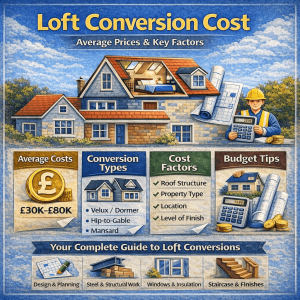
Loft conversions cost between £30,000 and £80,000, depending on what you’re trying to achieve.
If you’ve been searching online hoping to find one fixed price, you won’t, and anyone telling you otherwise probably isn’t being honest with you.
The reason loft conversion costs vary so much is simple: no two houses are the same, and no two homeowners want the same result.
A basic Velux conversion in a standard semi is a very different job to a full dormer or mansard with a luxury finish.
Add things like roof height, access, planning requirements, and where you live in the UK, and the numbers start to move quickly.
In our experience, the key isn’t chasing the cheapest quote, it’s understanding what you’re actually paying for and making sure the conversion works for your home long term. That’s what really matters.
If you’re still researching whether a loft conversion is the right move for your home, our full loft conversion guide covers the benefits, process, and options in more detail.
Average Loft Conversion Costs in the UK
In the UK, loft conversion costs typically range from £30,000 to £80,000.
Simple rooflight loft conversions usually start from around £30,000, while dormer and hip-to-gable conversions commonly fall between £40,000 and £65,000.
High-end mansard loft conversions can exceed £80,000 due to the scale of structural work involved.
Final costs depend on roof structure, property type, location, and level of finish.
If you’re trying to get your head around prices, the easiest way to do it is by looking at the type of loft conversion, because that’s what drives the bulk of the cost.
Here’s what most homeowners across the UK can realistically expect to pay.
- Velux / Rooflight loft conversion
£30,000 – £40,000
This is usually the most cost effective option. No major roof changes, just adding roof windows and converting the existing space.
Ideal if you’ve already got decent head height and want an extra bedroom or office without going overboard.
- Dormer loft conversion
£40,000 – £60,000
This is the most popular choice and for good reason. A dormer adds usable floor space and proper headroom, making the room feel like it actually belongs in the house.
If you want a bedroom with an en-suite, this is often the sweet spot.
- Hip-to-gable loft conversion
£45,000 – £65,000
Common on semi-detached and detached homes. By extending the sloping roof into a vertical wall, you gain a lot more space. It’s a bigger structural job, but the difference it makes is night and day.
- Mansard loft conversion
£60,000 – £80,000+
This is the high-end option. You’re effectively rebuilding part of the roof to create a full additional storey.
It’s the most expensive, but if you want maximum space and a premium finish, nothing else comes close.
If you’re wondering which one makes sense for your home, the honest answer is that it depends on your roof, your budget, and how you actually plan to use the space.
There’s no point paying for a mansard if a dormer gives you everything you need.
Cost Breakdown: Where Your Money Goes
One of the biggest frustrations we hear from homeowners is, “Why does a loft conversion cost that much?”
The short answer is that you’re not just paying for a new room, you’re paying for a lot of skilled work that has to be done properly, or it causes problems later.
Here’s where the budget is actually spent.
- Design & architectural plans
This is where the project starts. Proper drawings aren’t just a box-ticking exercise, they make sure everything fits, works structurally, and gets approved. Skimp here and you’ll feel it later when things don’t line up on site.
- Structural work (steel and floor strengthening)
This is the backbone of the conversion. Steel beams and reinforced floors carry the new load safely.
You won’t see most of this once it’s finished, but it’s one of the most important parts of the job.
Steel beams (RSJs) support the new floor and roof structure and are essential for safety and compliance.
Loft conversion steel beams cost around £1,500 to £3,500, depending on the size, number of beams required, and access to the property.
Although hidden once the loft is finished, this is one of the most important parts of the build and not an area where cutting corners is worth the risk.
- Roof alterations
Whether it’s a dormer, hip-to-gable, or mansard, changing the roof is skilled, time consuming work. Done well, it looks like it’s always been there. Done badly, it stands out for all the wrong reasons.
- Windows & insulation
Good windows bring in light and ventilation, while proper insulation keeps the space warm in winter and bearable in summer. This is not the place to cut corners if you actually want to enjoy the room.
- Plumbing & electrics
Adding lighting, sockets, heating, or an en-suite means new plumbing and electrics throughout the loft. It needs to be safe, compliant, and future proof, not something you want to redo in a couple of years.
- Staircase installation
A staircase has to meet building regulations and feel right in the house. This often surprises people, but a well designed staircase makes a huge difference to how natural the conversion feels.
- Plastering & finishes
This is where the space finally comes to life. Plastering, doors, skirting, and finishes are what turn a building site into a proper room you actually want to use.
If a quote looks suspiciously cheap, it’s usually because something on this list has been rushed, downgraded, or left out entirely.
In our experience, doing it properly the first time is always the cheaper option in the long run.
Factors That Affect Loft Conversion Costs
This is the bit most online guides gloss over, but in the real world these factors are what push a project up or down in price.
Two houses on the same street can cost very different amounts, and this is why.
- Property type (terraced, semi, detached)
Terraced houses are usually the simplest, while detached homes often cost more because there’s more roof to alter.
Semis sit somewhere in the middle, especially if you’re sharing a party wall.
- Existing roof height & structure
Got plenty of head height already? You’re winning. Low roofs often need structural changes, and that’s where costs climb quickly.
- Type of loft conversion
A rooflight conversion is the most straightforward. Dormers, hip-to-gables, and mansards involve more build time and materials, and yes, the price reflects that.
- Location in the UK
London and the South East cost more, full stop. Labour, parking, access, and logistics all add up compared to regional projects.
- Planning permission requirements
Permitted development keeps things simpler. Full planning permission adds time, drawings, and sometimes redesigns, which means extra cost before the build even starts.
- Level of finish (basic vs premium)
There’s a big difference between “functional” and “high-end.” Bespoke stairs, luxury bathrooms, and top-spec finishes can add tens of thousands if you’re not careful.
If you’re pricing up a loft conversion, be wary of anyone giving you a fixed figure without talking through these points first.
In our experience, that’s how budgets blow out later on.
Loft Conversion Costs by Property Type
Not all homes are created equal when it comes to loft conversions.
The type of property you own has a big say in how smooth the build is, and how much you’ll spend.
- Terraced Houses
Terraced homes are often the most cost-effective to convert. The roof structure is usually straightforward, and you’re not dealing with multiple elevations.
Access can be tight though, ever tried getting steel through a narrow hallway? That’s where time (and money) can creep in.
- Semi-Detached Houses
Semis are a mixed bag. If it’s a traditional roof with good height, great.
If it’s a hip roof, you’re likely looking at a hip-to-gable conversion, which adds complexity and cost.
Party wall agreements can also slow things down if not handled properly.
- Detached Houses
Detached properties usually cost more, not because they’re harder, but because they’re bigger.
More roof area, more materials, more scaffolding. The upside? Fewer neighbour issues and more design freedom.
You pay more, but you get more back.
- Bungalows
Bungalows can be fantastic candidates for loft conversions, but they’re rarely cheap. The roof often needs major structural work to create usable space, and stair placement can be tricky.
That said, the uplift in value can be huge if it’s done right.
The takeaway?
Your house type sets the baseline cost before you even talk finishes or layouts. Anyone quoting without factoring this in isn’t giving you the full picture.
Additional Costs to Budget For
This is the bit most homeowners don’t get told about until halfway through the job, the extras.
They’re not hidden fees, but they are often forgotten when people compare quotes.
- Building control fees
These are non negotiable. Someone has to sign the work off to make sure it’s safe and compliant. It’s not huge money in the grand scheme, but it needs to be in the budget from day one.
- Party wall agreements
If you’re in a terrace or semi, this can’t be ignored. Sometimes it’s as simple as a written agreement.
Other times you’ll need a surveyor involved, and that’s where costs start stacking up. Worth doing properly to avoid neighbour disputes later.
- Structural engineer fees
Steel calculations, load paths, floor strength, none of this is guesswork. A structural engineer is essential, not optional. If someone tells you otherwise, walk away.
- VAT
This one catches people out all the time. Loft conversions aren’t zero-rated, so VAT usually applies unless you’re doing very specific works.
Always check whether quotes are including it or quietly leaving it out.
- Decorating and furnishings
Plastering gives you a blank canvas, not a finished room. Paint, flooring, wardrobes, and furniture all come after the builders leave.
It’s where people tend to overspend because they’ve run out of patience and just want it done.
My advice? Set aside a contingency from the start. If you don’t need it, great. If you do, you’ll be glad it’s there.
Is a Loft Conversion Worth the Cost?
Short answer? In most cases, yes.
A well planned loft conversion usually adds between fifteen and twenty percent to a property’s value, sometimes more if you create an extra bedroom and bathroom.
Compare that to the cost of moving. Stamp duty, solicitors, removals, estate agents.
You can easily burn through tens of thousands without actually improving the home you love.
Then there’s extensions. Rear extensions are great, but they eat into garden space and often cost more per square metre. A loft uses space you already own.
No new footprint, no lost garden, no upsetting the neighbours quite as much.
If you plan to stay put for a few years, a loft conversion usually pays you back in both space and value.
How to Get an Accurate Loft Conversion Quote
Online averages are useful, but they are only ballpark figures.
Until someone has been in your loft, measured the head height, checked the roof structure and looked at access for stairs, any price is just guesswork.
A proper survey is what turns a rough estimate into a real quote. It’s how you avoid nasty surprises halfway through the build.
When you get quotes, make sure you are comparing like for like. Same scope, same finishes, same inclusions.
One cheap quote missing key items is rarely cheaper in the end.
Most importantly, choose a company that actually specialises in loft conversions.
Not a general builder who does the odd one. Experience matters up there, and it shows in both the price accuracy and the final result.
This is where speaking to a local loft conversion specialist makes all the difference.
Conclusion and Next Steps
Loft conversion costs vary because houses vary. That’s just the reality of it. The good news is that with proper planning, clear quotes and the right team, you can keep control of the budget and avoid surprises.
For most homeowners, a loft conversion is not just an expense. It’s a long term investment in space, comfort and property value. If you are thinking about taking the next step, the smartest move is to get a tailored quote based on your actual home, not an average pulled from the internet.
If you want honest advice and a clear idea of what your loft conversion would really cost, reach out to our team at Roof To Room and get the conversation started.