Loft Conversion FAQs: Honest Answers to the Most Common Questions Homeowners Ask
Let me be straight with you. Most loft conversion questions only get asked after something has already gone wrong. That is usually too late.
I speak to homeowners every week who say “I wish I’d known this before we started”. Sound familiar?
This guide exists to stop that happening to you.
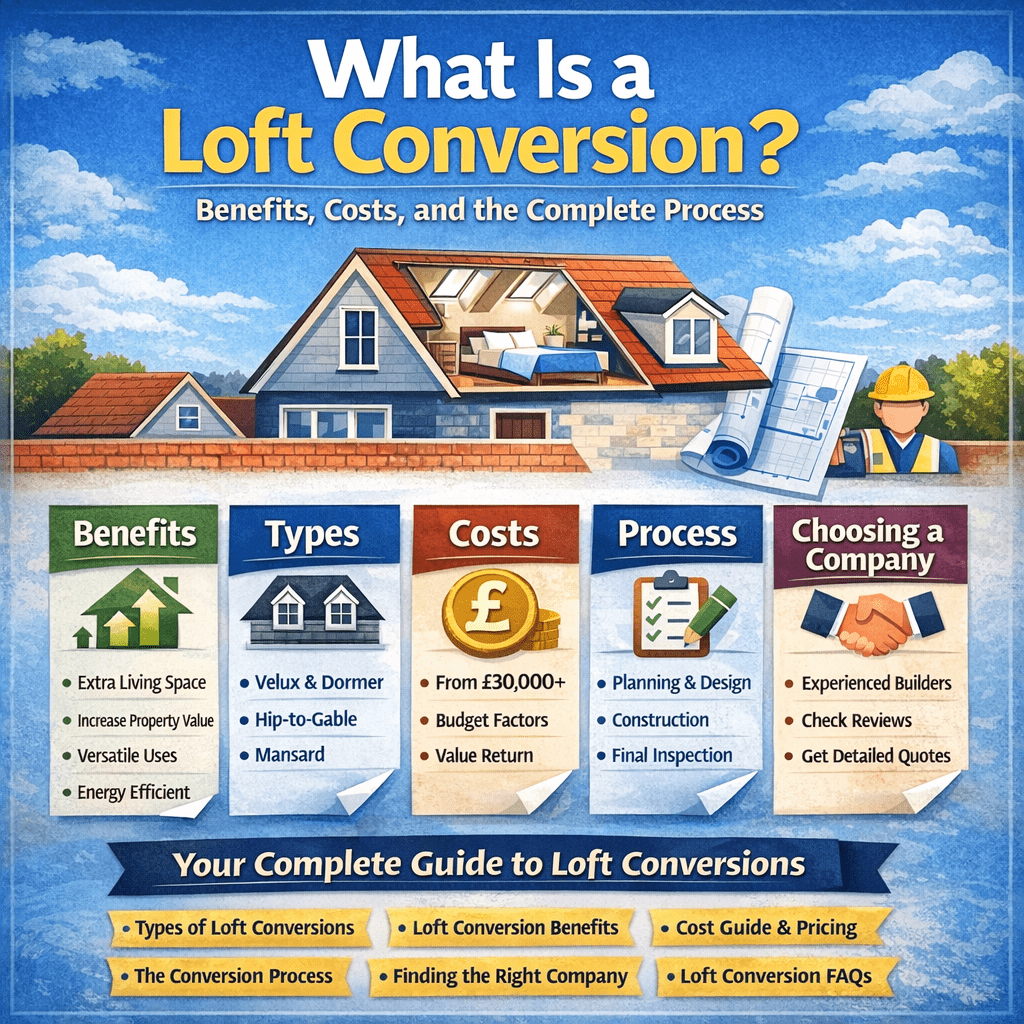
Before getting stuck into specific questions, it helps to have a solid understanding of what a loft conversion actually is and how it works.
If you have not already, start with our full guide on what a loft conversion involves, because everything else hangs off that.
Loft conversions are not mysterious, but they are full of small details that matter. Planning rules, building regulations, costs, timelines, stairs, head height.
Miss one and the whole job becomes harder than it needs to be. The UK Building Regulations alone run to hundreds of pages, so no wonder people feel unsure.
So ask yourself this. Do you want quick answers pulled from forums, or clear explanations based on real projects?
These are the questions I get asked most, answered honestly, without sales fluff, and with the benefit of experience on site, not just theory.
Do loft conversions usually need planning permission in the UK?
Most of the time, no, loft conversions in the UK do not need planning permission. But and this is a big but that only holds true if the design stays within permitted development rules.
Those rules cover things like how much extra roof volume you add, whether the roof height changes, and how visible the conversion is from the street. Step outside those limits and planning permission is suddenly back on the table.
Here’s my firm opinion. Treating planning as an afterthought is asking for trouble.
So before you get carried away with drawings and Pinterest boards, ask yourself this. Has anyone actually checked your property properly, or are you just hoping it falls under the rules?
A five minute assumption can cost months later.
What building regulations apply to loft conversions and why do they matter?
Building regulations apply to every loft conversion, no exceptions. I do not care who tells you otherwise.
These rules cover the unglamorous but critical stuff. Structure, fire safety, insulation, stairs, sound, and access. They are there to make sure the space is safe to live in, not just nice to look at.
Here’s the bit people miss. Planning permission is about whether you are allowed to build it. Building regulations are about whether it is built properly. Confusing the two causes most of the problems I see.
Ask yourself this. Would you feel comfortable sleeping up there if the floor strength, fire escape, or insulation had been guessed?
UK Approved Documents set out these standards for a reason. Ignore them and the loft might look finished, but it will never truly be complete.
How long does a typical loft conversion take from start to finish?
A typical loft conversion takes around six to ten weeks once work actually starts on site. That covers structural work, roof alterations, stairs, insulation, plastering, and second fix. Straightforward jobs sit at the lower end. More complex builds push towards the top.
What stretches timelines is rarely the build itself. It’s decisions made late, materials not chosen, or issues that should have been spotted earlier. I’ve seen weeks lost because stairs were not finalised or building control queries were left hanging.
So here’s the real question. Are you treating the timeline as a plan, or as a vague hope?
Good preparation keeps things moving. Poor planning turns a clear schedule into a guessing game.
What is a realistic budget for a loft conversion today?
A realistic budget for a loft conversion today is usually between £35,000 and £75,000, depending on the type of conversion, the structure of the roof, and the level of finish you choose.
Now here’s the bit people often miss. That range is not just about adding a room. It covers structural steel, new floors, insulation, fire protection, stairs, electrics, plumbing, building control, and the finishing that makes the space actually usable.
If someone is quoting far below that without explaining why, you should be asking serious questions.
Ask yourself this. Are you budgeting for a finished room you can live in, or just the shell you are picturing in your head?
I have seen plenty of projects start cheap and end expensive because costs were hidden or ignored early on.
Things like roof structure, head height solutions, and fire regulations do not disappear just because they were not discussed.
Industry data and lender guidance consistently show loft conversions sit comfortably in this bracket when done properly, and that is before upgrades and extras are added.
If you want a clear breakdown of where the money actually goes and how to avoid budget shocks, our full guide on loft conversion costs explains it properly, without guesswork.
Is converting a loft better value than moving house?
Yes, in most cases converting a loft is better value than moving house, and I say that confidently after seeing the numbers play out time and time again.
Moving sounds simple until you add it all up. Stamp duty, legal fees, estate agent costs, removals, and the price jump to get the extra space you want.
In many parts of the UK that alone can run well into five figures, before you have even unpacked a box.
Now ask yourself this. Would you rather spend that money on fees and stress, or on improving the home you already like?
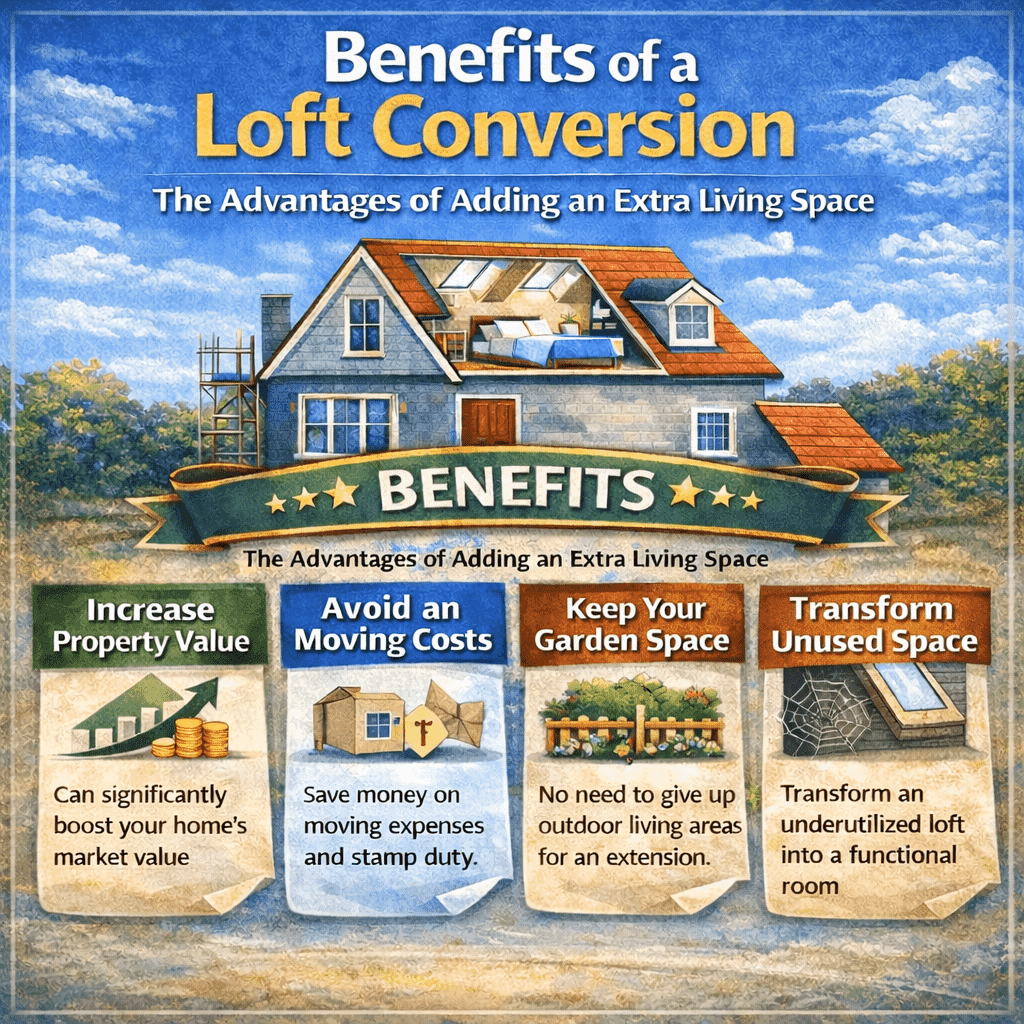
A well designed loft conversion adds usable living space without losing garden area, and property market data regularly shows that quality loft conversions can add significant value to a home, often more than the cost of the work itself when done properly.
I am not saying loft conversions are always the right answer, but for homeowners who like their location and just need more room, they usually make far more financial sense than starting again somewhere else.
How much value can a loft conversion add to a property?
A loft conversion can add serious value to a property when it is done properly, and I am not talking in vague marketing terms here.
As a rough guide, UK property data is consistently quoted at up to around twenty percent uplift for a well executed loft conversion, especially when it creates an extra bedroom or bedroom and bathroom.
Estate agents care about one thing first. Bedroom count and usable floor space. A loft that feels like a natural part of the house ticks both boxes.
But here is the honest bit. Value is not automatic. A cramped room with poor stairs, weak head height or awkward layout will not impress buyers, no matter how much it cost to build.
So the real question is this. Are you adding space that people actually want to live in, or just filling the roof for the sake of it?
In my experience, the loft conversions that add the most value are the ones that feel obvious.
As if the house was always meant to have that room. When design, light and access are right, the uplift usually follows.
What different types of loft conversions are available?
There are a few main types of loft conversions, and choosing the right one matters far more than most people realise.
The simplest is a rooflight or Velux conversion. No change to the roof shape, just windows added. It works well when head height is already generous and budgets need to stay sensible.
Dormer conversions are the most common step up. They add usable space and headroom by extending out from the roof, which is why so many homes go this route.
Hip to gable conversions suit certain house types, especially semis, by straightening the roof line to create more internal width.
Mansards go further again and deliver maximum space, but they come with higher cost and planning considerations.
Here is my straight take. The best option is the one that suits the roof you already have, not the one that looks best on Instagram.
If you want a deeper breakdown of layouts, pros and trade offs, our guide to the different types of loft conversions explains each option in plain English and helps you work out what actually fits your home.
How can you tell if your loft is suitable for conversion?
You can usually tell if a loft is suitable for conversion by checking a few fundamentals, but guessing is where people go wrong.
Head height is the first one. If you have around 2.3 metres from floor to ridge before any work, you are normally in a good position.
Less than that does not mean no, but it does mean complexity and cost. Roof structure matters too.
Traditional cut roofs are far easier to work with than modern trussed roofs, which often need significant structural alterations.
Then there is the staircase. Can you actually get one in without wrecking the layout below. That is the part many homeowners overlook.
Here is my honest advice. Standing in the loft with a tape measure is not enough. A proper assessment looks at structure, access, regulations and cost together.
So ask yourself this. Do you want certainty early, or surprises halfway through the build.
Can you live in your home while a loft conversion is being built?
Yes, in most cases you can live in your home while a loft conversion is being built, and that often surprises people.
The reality is that a well run loft conversion starts from the outside. Scaffolding goes up, the roof is opened, and most of the early work happens above your ceiling.
That means day to day life downstairs carries on largely as normal for the first few weeks.
That said, let me be clear. It is not disruption free. There will be noise, there will be dust, and there will be days when it feels intrusive.
The difference is how it is managed. Good teams plan access properly and delay breaking through the ceiling until as late as possible.
So ask yourself this. Would you rather move out for months, or accept some short term disruption to stay put.
In my view, most homeowners cope just fine when expectations are set properly from the start.
How disruptive is a loft conversion compared to an extension?
A loft conversion is usually far less disruptive than a ground floor extension, and I say that from watching both play out in real homes.
An extension means foundations, digging, concrete, and weeks of work right where you live your daily life.
Kitchens get knocked through, gardens disappear, and access becomes a headache. With a loft conversion, most of the heavy work happens above you.
Scaffolding goes up, materials come in through the roof, and your ground floor stays largely intact.
That does not mean it is silent or invisible. There will be noise and movement, especially when stairs go in. But disruption is shorter and more contained.
Here is the question worth thinking about. Do you want builders walking through your kitchen every day, or working mostly above your head for a few weeks. For most households, the answer is obvious.
What rooms work best in a loft conversion?
Some rooms simply belong in a loft, and others only work if the layout is right. In my experience, bedrooms are the obvious winner.
They suit the privacy of the top floor and work well with sloping ceilings. Add an ensuite and it often becomes the most desirable room in the house.
Home offices are another strong choice, especially now that quiet space matters more than ever.
Being physically separated from the rest of the house makes a real difference to focus. Guest rooms also work well, giving visitors their own space without taking over everyday areas.
What I tend to push back on is trying to force too many uses into one loft. A bedroom, gym, office and storage all squeezed together rarely feels right.
The best loft conversions have a clear purpose from day one. When the room knows what it is meant to be, everything else falls into place.
Are stairs always required for a loft conversion?
Yes, stairs are always required for a loft conversion if the space is going to be used as a proper room.
There is no grey area on this. UK Building Regulations are clear that safe, permanent access is mandatory, which means a full staircase, not a ladder or anything retractable.
The question people should really be asking is not whether stairs are needed, but where they should go.
That is where good planning makes or breaks the layout of the whole house. Get it right and the stairs feel natural. Get it wrong and you resent them every single day.
Here’s my firm view. Staircases should never be squeezed in at the end to save money or space.
When stairs are designed early, they protect headroom, meet fire regulations, and avoid ruining rooms below.
When they are left too late, they become the most expensive compromise in the entire project.
Does a loft conversion affect the existing roof or structure?
Yes, a loft conversion does affect the existing roof and structure, and anyone telling you otherwise is downplaying the reality of the work.
The roof itself usually stays in place, but what happens underneath it changes completely.
New floor joists are added, steel beams are installed to carry the load, and parts of the roof structure are altered so the space can be used safely. That is not cosmetic work, it is structural engineering.
What catches people out is assuming the house will just cope. It won’t, unless it is designed properly.
The original ceiling joists were never meant to act as a floor, and without reinforcement you risk movement, cracking, and long term issues.
Here’s my honest view. A well designed loft conversion strengthens a house rather than weakens it.
When the structure is calculated and installed correctly, the building becomes more stable, not less.
The problems only appear when corners are cut or the structural work is treated as optional.
What fire safety rules apply to loft conversions?
Fire safety rules apply to every loft conversion, no exceptions, and they are one area I never think homeowners should gamble with.
Once you add a new storey, the escape route through the house becomes critical.
Building Regulations usually require fire doors to rooms off the stairwell, mains wired smoke alarms on each level, and a protected escape route down to an external door. In some cases, window sizes and stair layouts are also affected.
What worries me is how often this gets brushed aside early on. People focus on the room they are gaining and forget how they would actually get out if there was a fire at night. That is not a detail you fix later.
Ask yourself this. Would you be comfortable signing off a space your family sleeps in without proper fire protection in place?
Here is my firm opinion. Fire safety rules are not box ticking exercises. They exist because loft conversions change how a house behaves in an emergency.
When they are designed in properly from the start, they rarely cause problems. When they are ignored, they stop projects being signed off and can create serious risks that follow you when you sell or insure the house.
What happens after the build is finished and how does aftercare work?
Once the build is finished, a loft conversion is not simply done and forgotten, or at least it should not be.
The final stage is snagging. That is where the small but important details get checked and adjusted.
Doors, finishes, seals, electrics, anything that needs fine tuning once the space is being used properly. This is completely normal, and any professional company should expect it.
Building Control sign off also happens at this point. You should receive completion certificates confirming the loft meets regulations. Without them, you can run into problems later when selling or remortgaging.
Here is where opinion matters. Aftercare tells you everything about the company you hired. Good builders stay in touch, fix issues promptly, and honour guarantees without excuses.
Poor ones disappear the moment the final payment clears.
So ask yourself this. If something needs adjusting three months down the line,
do you know who to call, and are you confident they will answer?
A loft conversion should feel like a long term improvement, not a job you are left managing once the scaffolding comes down.
If you want straight answers and proper guidance before or after a build, reach out to Roof To Room to discuss your loft conversion. A quick conversation early on can save a lot of stress later.