Loft Conversion Process: From Planning to Completion
Let’s be honest, when most people think about the loft conversion process, their mind jumps straight to mess, noise, and builders taking over the house for months.
I hear it all the time. How long does it actually take?
What happens first? And at what point does it stop feeling like chaos?
Here’s my straight answer. A loft conversion only feels stressful when you do not understand the process or when it is poorly managed.
When it is planned properly, it follows a clear order and feels far more controlled than people expect.
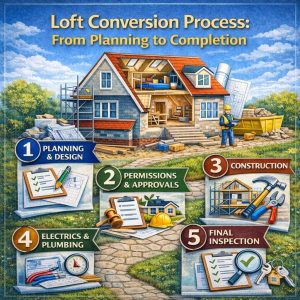
Every successful loft conversion goes through the same core stages.
First, checking whether the loft can even be converted. Then sorting designs and permissions, strengthening the structure, building the space, finishing it properly, and signing it off.
So how long does a loft conversion actually take?
In most cases, the build itself takes around six to ten weeks once work starts.
Simpler loft conversions can be quicker, while more complex projects involving planning permission or heavier structural work take longer.
When everything is planned properly upfront, the timeline is far more predictable than most homeowners expect.
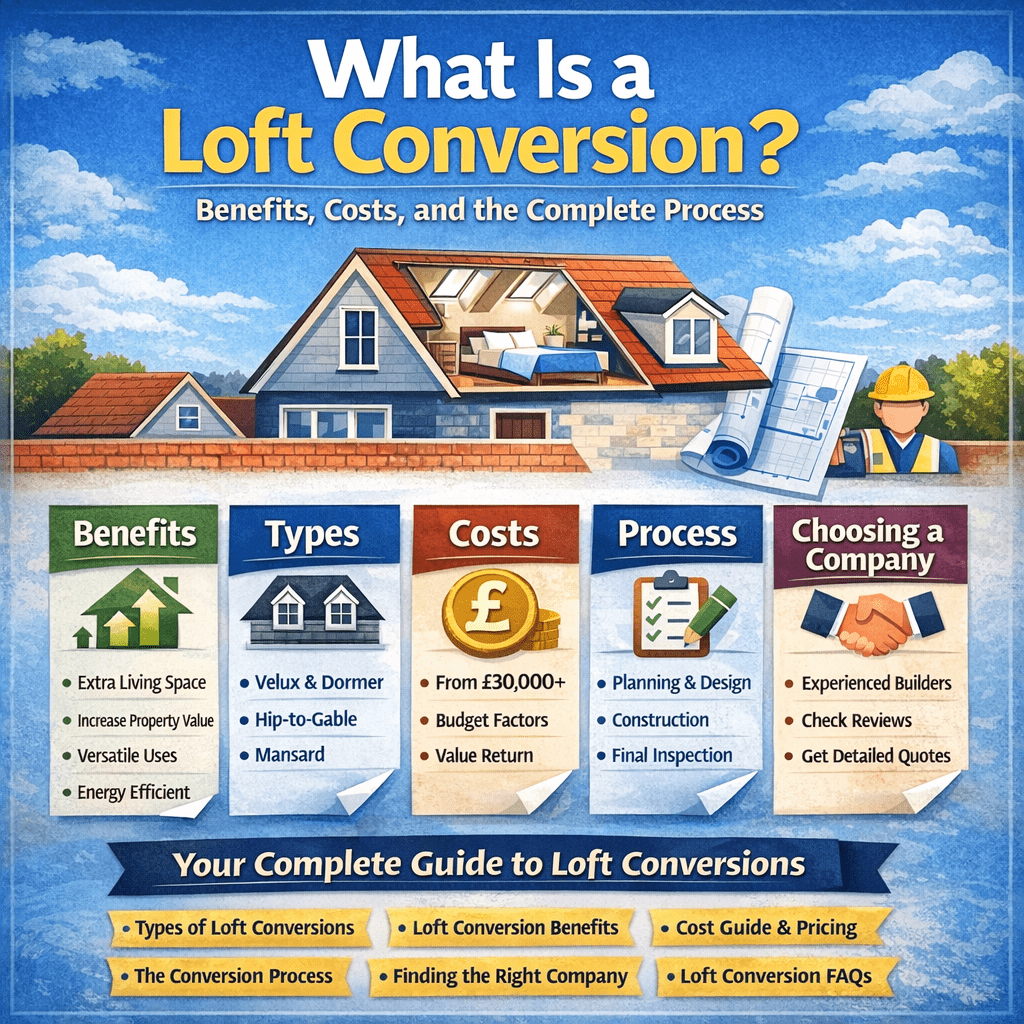
If you are still at the early research stage and want a full overview of what a loft conversion actually is, including the benefits, costs, and different types, it is worth reading our complete guide to what a loft conversion involves before going any further.
Miss a step or rush one, and problems show up later. Do it in the right order, with the right people, and the whole job runs smoother than most homeowners imagine.
If you are wondering what actually happens from the first survey to the final sign off, you are in the right place. Let me walk you through it properly.
Understanding Whether Your Loft Is Suitable
This is always the first question people ask me, and rightly so.
Is my loft suitable for conversion, or am I wasting my time even thinking about it?
Let’s start with head height. In plain terms, you usually want around 2.2 metres at the highest point before any work starts.
That gives you enough clearance once floors and insulation go in. Anything less does not mean it is impossible, but it does mean the conversation gets more technical and sometimes more expensive. That is the reality.
Next is the roof itself. Older homes often have traditional cut roofs, which are much easier to work with.
Newer houses tend to have trussed roofs, and while they can still be converted, they need more structural input to make it work safely.
Then there is the staircase. If you cannot get a proper set of stairs in without ruining the layout below, that is a problem. Building regulations do not bend on this.
Finally, structure. Every loft conversion relies on strengthening the floor and supporting the new space properly.
Can your loft be converted?
Most can, but it takes an honest assessment, not guesswork.
Defining What You Want From The Loft Conversion
Before anyone talks drawings or costs, you need to be clear on one thing.
What do you actually want this loft to do for you?
This is where people often trip up. They say “extra space” but that could mean very different things.
Is it a proper bedroom that someone will live in every day?
A home office where you can shut the door and focus?
Or are you thinking longer term, maybe a guest room now that could become a teenager’s bedroom later?
Future flexibility matters more than people realise. Life changes. Families grow. Work patterns shift. A well planned loft should still make sense five or ten years down the line.
You also need to think downstairs. Where will the stairs land? What room space will you lose to gain the loft? There is always a trade off, and pretending there isn’t usually leads to regret later.
If you are asking yourself what can I use my loft for, the honest answer is almost anything, as long as it is planned properly from the start.
That is how you get loft conversion room ideas that actually work in real homes, not just on Pinterest.
Setting a Realistic Budget Early
Let’s talk money, because avoiding it does not make it cheaper.
One of the biggest mistakes I see is people falling in love with the idea of a loft conversion before they have a realistic budget in mind.
In the UK, most loft conversions sit somewhere between thirty and eighty thousand pounds, depending on the type of conversion, the structure of the roof, and how far you want to take the finish.
There is no single price that fits every house, and anyone claiming otherwise is guessing at best.
If you want a proper breakdown of what affects pricing, including realistic examples by conversion type, it is worth reading our full guide on loft conversion costs before you go any further.
Budgets usually overrun for one simple reason. Things only come to light once work starts. Low head height, additional steel, upgrades to electrics or insulation. None of this is unusual.
This is why contingency matters. Industry guidance from organisations such as the Federation of Master Builders suggests allowing around ten to fifteen percent on top of your build cost for the unexpected. Ignore that advice and stress usually follows.
If you are asking how much you should budget for a loft conversion, my honest answer is this.
Set a clear range early, build in breathing room, and make decisions based on what you can comfortably afford, not the absolute maximum.
Choosing the Right Type of Loft Conversion
This is the point where most homeowners ask the same question.
Which loft conversion is actually best for my house?
The honest answer is that the best type of loft conversion is the one that suits your roof, your budget, and what you want the space to do. Not what looks good on Instagram.
If you have good head height and a straightforward roof, a Velux conversion can be a smart, cost effective option. It keeps disruption down and works well for offices or spare rooms.
Dormers are the most popular for a reason. They add usable floor space and proper headroom, which makes a loft feel like a real room rather than an attic. If you want a bedroom or an ensuite, this is often the sweet spot.
Hip to gable conversions work best on semis and end terraces where the sloping side of the roof is holding you back. They create space that simply is not there right now.
Mansards deliver the most space, but they come with higher costs and planning considerations. They make sense when maximum space is the priority.
So ask yourself this. Do you want the biggest possible room, or the right room for your house?
Getting that decision right early saves money, stress, and disappointment later.
If you want a deeper breakdown of each option, including pros, cons, and suitability, it is worth reading our full guide on types of loft conversions before locking anything in.
Choosing a Loft Conversion Specialist
This decision matters more than most people realise. A loft conversion is not the same as an extension or a bit of general building work.
You are cutting into the structure of your home, working around roof loads, fire regulations, stair design, and tight spaces. That is specialist territory.
A general builder might be great on ground level, but lofts are a different game.
A proper loft conversion specialist understands roof structures, head height issues, and how to keep disruption down while people are still living in the house. That experience shows quickly on site.
You will also need to decide whether to go design and build or split the work between an architect and a builder.
Design and build works well when the team has real loft experience and clear processes. Separate teams can work too, but only when communication is tight.
Watch for red flags. Vague quotes, no clear timeline, or anyone who brushes off building regulations should stop you in your tracks.
Industry bodies like the Federation of Master Builders consistently highlight poor planning and unclear scope as the biggest causes of disputes.
If you are asking how to choose a loft conversion company, my advice is simple. Choose specialists, not promises.
Measured Survey of the Property
Before anything meaningful happens, a proper measured survey is essential.
This is where guesswork stops and real decisions begin. A loft measured survey looks at exact dimensions, roof structure, and how the space actually works, not how it looks from the landing.
We measure head height properly, inspect the roof from inside, and check access routes for materials and stairs.
Miss any of this and problems show up later, usually when they are expensive to fix.
Ever been told a loft will work, only to find out halfway through that the numbers do not stack up? That usually comes down to a poor loft conversion survey.
This stage also flags practical issues early. Can steels get in? Is scaffolding straightforward? Will the stairs land where you expect? It is not glamorous, but it is critical.
If you are wondering whether your loft can really be converted, this survey is where you get honest answers.
Architectural Design and Layout Planning
This is where a loft conversion either becomes a joy to live in or a daily annoyance.
Good loft conversion design is not about squeezing in walls, it is about how the space feels when you use it every day.
I always say layout comes before looks. If the room works properly, everything else follows.
Headroom is the first thing we design around. There is no point having a beautiful space if you are ducking every time you stand up.
A good designer knows how to position the usable areas where ceiling height is strongest and push storage into the tighter zones.
Window placement matters more than people realise. Get it right and the room feels open, bright, and calm.
Get it wrong and it can feel gloomy no matter how nice the finish is. Natural light and ventilation are not optional extras.
Proper loft layout planning turns awkward roof space into a room that feels like it has always belonged in the house.
Structural Calculations and Engineering Design
This is the part most homeowners never see, but it’s the bit that makes everything else possible.
Before a single board goes down, structural calculations for the loft conversion need to be done properly. No guessing, no rules of thumb.
A loft conversion structural engineer looks at how the weight of the new room will travel through the house.
Steel beams are designed to carry that load safely. Floors are strengthened so they don’t bounce or sag.
Load paths are checked so the house behaves exactly as it should once people start living up there.
If someone downplays this stage, walk away. I’ve seen projects where corners were cut and the knock on effects were expensive and stressful to fix later.
This isn’t about over engineering. It’s about getting it right first time so the space feels solid, quiet, and safe for the long term.
You want confidence when you walk into your loft, not creaks and doubts.
Planning Permission or Permitted Development
This is usually where the confusion starts. Do I need planning permission for a loft conversion, or can I just crack on?
In many cases, loft conversions fall under permitted development, which means you do not need full planning permission.
Velux conversions and many rear dormers often sit comfortably within those rules, as long as size limits and design restrictions are respected.
That said, permitted development is not a free pass. Volume allowances, roof height, materials, and overlooking rules all apply. Step outside those limits and planning permission becomes unavoidable.
Then there’s the local authority factor. Councils interpret rules slightly differently, especially in conservation areas or on certain property types. What sails through in one area can be flagged in another.
My advice is simple. Never assume. Check properly before you commit. Getting this wrong can stop a build mid flow or cause problems when you sell.
If you are asking whether your project needs planning permission or qualifies as a permitted development loft conversion, get that answer early. It saves time, money, and a lot of unnecessary stress.
Building Regulations Approval
Planning gets all the attention, but building regulations for a loft conversion are the part that really matters. This is about safety, not paperwork.
Fire safety is the big one. Escape routes, fire doors, smoke alarms and sometimes upgraded floors or ceilings below all come into play.
These rules exist for a reason. Cutting corners here is not just risky, it can make the space illegal to use.
Insulation is another area people underestimate. A loft needs to meet modern thermal standards, otherwise it will be freezing in winter and unbearable in summer.
Good insulation is not optional, it is what makes the room comfortable and energy efficient long term.
Then there is the staircase. Pitch, width, headroom and handrails all have to comply. Building control will not sign off a ladder or something that feels like an afterthought.
Every loft conversion must be approved by loft conversion building control, either through the council or an approved inspector.
No approval means no completion certificate, and that causes real problems when you come to sell.
Do it right once, and you never have to worry about it again.
Pre Start Preparation and Scaffolding
This is the stage most homeowners forget about, but it sets the tone for the whole build. Good loft conversion preparation makes the difference between a smooth project and weeks of unnecessary stress.
Scaffolding for the loft conversion usually goes up first. It allows most of the work to happen from the outside, which keeps mess and disruption inside your home to a minimum.
If a builder wants to start cutting holes through your ceiling before scaffolding is in place, that should make you pause.
Next comes material delivery. Steel, timber, windows and insulation need to be planned properly so your driveway does not turn into a storage yard for weeks.
A good team stages deliveries to avoid clutter and access issues.
Finally, protecting your home matters. Floor coverings, dust protection and clear access routes are not extras, they are basic standards.
Get this stage right and the rest of the build feels far more controlled.
Structural Work and Floor Reinforcement
This is the point where your loft stops being an idea and starts becoming part of the house.
Structural work is not glamorous, but it is absolutely critical. Get this wrong and nothing else matters.
Most lofts were never designed to be lived in, which is why loft floor strengthening is essential.
Existing ceiling joists simply are not strong enough to carry furniture, people, and daily use. A new floor structure is built above them, designed to handle proper loads safely.
Steel beams are usually brought in at this stage. Steel beams in a loft conversion, often referred to as RSJs, transfer weight down to the main load bearing walls.
This is not guesswork. Structural engineers calculate load paths precisely to make sure the house carries the new space without stress.
I will be blunt here. If a builder downplays the importance of this stage or says timber alone will be fine without calculations, walk away.
Structural safety is not something you see when the job is finished, but it is what allows you to sleep comfortably in that new room for decades to come.
Roof Alterations and External Construction
This is the stage where the outside of your house starts to change, and it is also where quality really shows.
Loft roof alterations are not just about creating space, they are about protecting your home while that space is being built.
If you are having a dormer, this is when the structure is formed and tied into the existing roof.
Proper dormer loft construction should look like it has always been there, not something bolted on as an afterthought.
The same applies to hip to gable works, where a sloping roof is rebuilt into a vertical wall to unlock space that simply did not exist before.
Weatherproofing matters more than most people realise. Your roof is opened up during this phase, sometimes for days at a time.
Good teams plan around forecasts, use temporary coverings properly, and never leave a property exposed overnight.
Here is my honest take. Anyone can build a structure. Not everyone can integrate it seamlessly into an existing roof while keeping the house watertight throughout.
Get this stage right and everything that follows becomes easier.
Get it wrong and problems tend to surface years later, usually when it is far more expensive to fix.
Windows, Insulation and Weatherproofing
This is the point where I usually ask homeowners a simple question.
Do you want your loft to feel like a proper room, or are you happy with something that looks good but never quite feels right?
Loft conversion windows do far more than let light in. Their position affects how the room heats up, how private it feels, and whether it is usable all year round.
I have lost count of how many lofts I have seen that are boiling hot in summer and gloomy the rest of the year simply because window placement was treated as an afterthought.
Then there are loft insulation requirements, and this is not an area where opinions vary. If insulation is done poorly, the room will always feel uncomfortable.
Heat rises, sound travels, and without proper insulation you will hear it and feel it. Done properly, insulation keeps the loft warm in winter, cooler in summer, and quieter overall.
Weatherproofing is the final test. If wind or rain can get in now, it will cause problems later. Do this stage properly and the loft feels like it has always belonged in the house.
Staircase Installation
This is the stage where a loft conversion either starts to feel right, or it causes regret every single day.
Loft conversion stairs are not just a way up, they shape how the whole house works. I always ask homeowners this first.
Where will the stairs land, and what are you willing to give up downstairs to make them work properly?
Staircase regulations for a loft conversion are strict for good reason. Headroom, pitch, handrails and fire safety all have to meet building regs, and there is no bending those rules. If someone tells you otherwise, walk away.
The real challenge is positioning. Put stairs in the wrong place and suddenly a bedroom feels cramped or a hallway loses its flow. Done well, the stairs feel natural, almost like they were always there.
My honest view is this. If the staircase does not work, the loft never truly works. Get this right and everything else falls into place.
First Fix Electrics and Plumbing
This is the part most homeowners never see, but it is one of the most important stages of the whole build.
First fix is where the bones of the loft go in. Loft electrics are planned and wired before walls are closed, and this is where thinking ahead really matters.
How many sockets do you actually need. Where will lamps, desks, or a bed sit in real life, not just on a drawing?
Heating is another big decision. Do you extend the existing system or add something independent. Get this wrong and the room will never feel comfortable, no matter how nice it looks.
If you are adding a bathroom, loft conversion plumbing needs extra care. Water pressure, waste runs, and ventilation all need to work properly or problems show up later.
Here is my honest take. Rushing first fix to save time is false economy. Once walls are closed, changes cost more. Ask yourself now, will this space still work for me in five years.
Plastering, Second Fix and Finishing
This is the stage where a loft finally stops feeling like a building site and starts feeling like part of your home.
Up to now it has all been structure and systems. This is where it turns into a room you actually want to be in.
Plastering comes first, and it matters more than people realise. Good plastering sets the tone for everything that follows.
Smooth walls, clean lines, no ripples catching the light. If this part is rushed, you will notice it every single day.
I am firm on this one. Loft conversion finishing lives or dies on the quality of the basics.
Then comes second fix loft conversion work. Doors are hung, skirting and architraves go on, sockets and switches are fitted properly rather than dangling out of walls.
This is also where joinery really shows. Does everything line up? Do doors close cleanly? Does it feel solid?
Final fittings pull it all together. Radiators, bathroom fittings if you have them, light fittings that actually suit the space.
This is the moment most homeowners breathe out and say, yes, this is what I imagined.
Ask yourself this. Do you want a loft that looks finished, or one that just looks done?
Final Inspections, Sign-Off and Handover
This final stage is where everything either feels properly finished or slightly uneasy, and there is a big difference between the two.
Loft conversion completion should give you confidence, not questions.
Before anyone talks about handover, building control sign off for a loft conversion has to be in place.
An independent inspector checks the work against building regulations, looking closely at fire safety, insulation, stairs, structure, and access.
This is not paperwork for the sake of it. Without sign off, the loft is not officially compliant, and that can cause real problems later if you remortgage or sell.
Would you feel comfortable owning a space that is not fully approved?
You should also be given certificates for electrics, plumbing, and any structural elements.
These documents matter. They prove qualified trades carried out the work and that it meets current standards.
If certificates are missing, that is not a small oversight, it is a red flag.
A proper loft conversion completion also includes snagging. This is where small issues are picked up and resolved before the job is closed.
Loose handles, minor cracks, adjustments to doors. The details that turn a good build into a finished room.
My view is simple. A job is not complete until you can walk into the loft, use it comfortably, and file away all the paperwork knowing everything has been done properly.
That is what a correct handover should feel like.
To Enquire about a loft conversion for your home feel free to reach out to us and we will answer and questions you have www.rooftoroom.co.uk